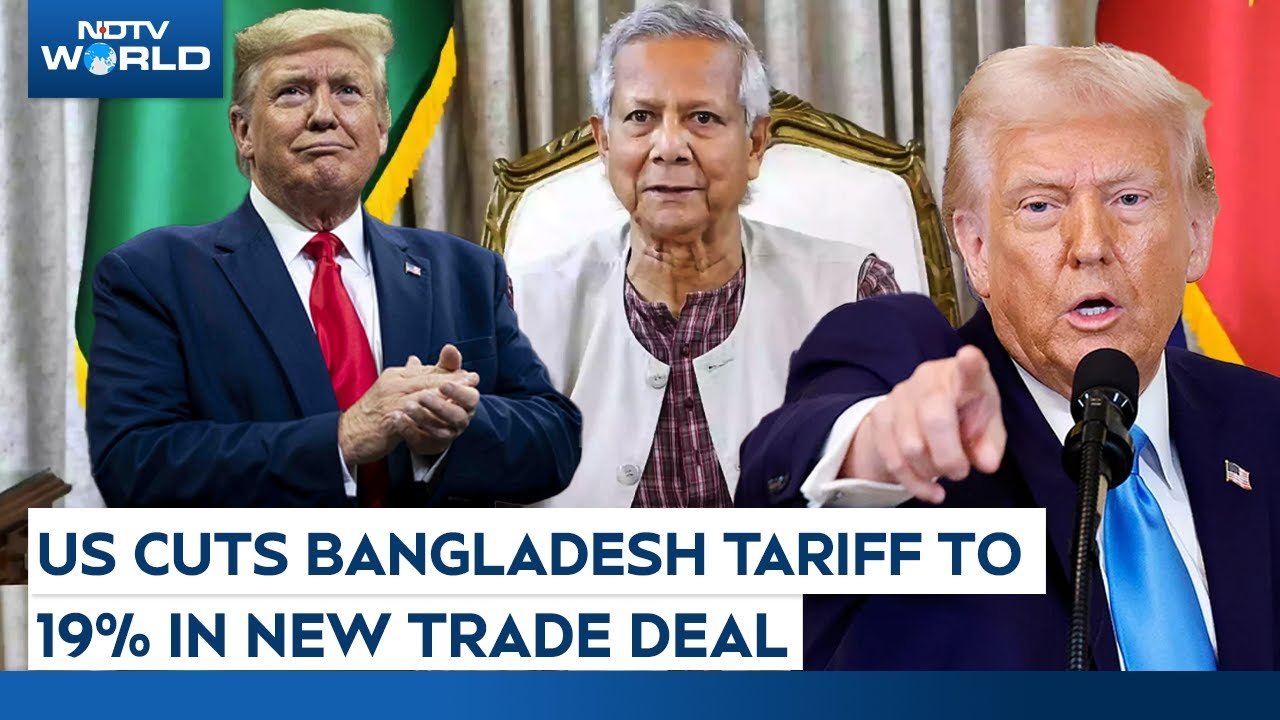
In a major boost to South Asian trade and global supply chains, Bangladesh has finalized a landmark trade deal with the United States, resulting in a sharp reduction of U.S. import tariffs to 19% on key Bangladeshi exports. This move is being seen as a strategic win for both nations—strengthening bilateral ties while reshaping trade dynamics in the region.
The announcement has already created buzz among exporters, investors, and policymakers, as the tariff cut is expected to unlock billions of dollars in trade opportunities and improve Bangladesh’s competitiveness in the U.S. market.
What Is the Bangladesh–U.S. Trade Deal?
Under the new agreement:
- The United States has reduced import tariffs on selected Bangladeshi goods to 19%
- The deal covers textiles, garments, leather products, and light manufacturing
- Bangladesh has committed to improving labor standards, compliance, and supply-chain transparency
- Both countries agreed to expand cooperation in investment, technology, and logistics
This marks one of the most significant trade breakthroughs for Bangladesh in recent years, particularly with its largest single export destination.
Why This Deal Matters Right Now
The timing of this trade agreement is crucial.
With global markets under pressure due to inflation, supply chain disruptions, and geopolitical uncertainty, the U.S. is actively diversifying its import sources. Bangladesh, meanwhile, is seeking to protect export growth as it prepares for eventual graduation from Least Developed Country (LDC) status.
Lower tariffs mean:
- Bangladeshi products become more affordable for U.S. buyers
- American retailers gain access to cost-effective and reliable suppliers
- Reduced dependence on a single manufacturing hub in Asia
Impact on Bangladesh’s Economy
1. Boost to Exports
The garment and textile sector—accounting for over 80% of Bangladesh’s exports—stands to gain the most. A 19% tariff makes Bangladeshi goods far more competitive compared to rivals facing higher duties.
2. Job Creation
Export growth is expected to lead to new factory orders, helping create jobs for millions of workers, particularly women employed in the apparel sector.
3. Foreign Investment
Lower trade barriers often attract U.S. and global investors, especially in manufacturing, logistics, and infrastructure.
What the U.S. Gains From This Agreement
For the United States, the deal is more than just tariffs.
- Supply chain diversification away from over-reliance on a few countries
- Access to a fast-growing manufacturing economy
- Strengthened political and economic ties in South Asia
- Support for ethical sourcing through improved labor commitments
American brands and retailers are expected to benefit from stable pricing and improved sourcing flexibility.
Key Sectors Benefiting From the Tariff Cut
| Sector | Expected Impact |
|---|---|
| Ready-Made Garments | Higher exports, increased U.S. orders |
| Textiles & Fabrics | Improved price competitiveness |
| Leather & Footwear | Expansion into premium U.S. markets |
| Light Manufacturing | New sourcing opportunities |
How This Deal Changes Global Trade Dynamics
Trade analysts believe this agreement could:
- Position Bangladesh as a top alternative manufacturing hub
- Increase competition among Asian exporters
- Encourage similar tariff negotiations with other developing nations
- Strengthen U.S. influence in regional trade partnerships
It also sends a strong signal that trade reforms and compliance improvements can deliver tangible rewards.
Challenges and What Comes Next
While the deal is promising, challenges remain:
- Bangladesh must strictly enforce labor and safety reforms
- Infrastructure and port efficiency need upgrades
- Compliance monitoring will be closely watched by U.S. authorities
However, officials from both sides have expressed confidence that ongoing dialogue and cooperation will help address these concerns.
Expert Reactions
Trade experts are calling the agreement a “game-changer” for Bangladesh’s export economy.
“A 19% tariff level significantly improves Bangladesh’s market position in the U.S. This could redefine apparel sourcing over the next decade,” said a senior global trade analyst.
Final Thoughts
The Bangladesh–U.S. trade deal is a strategic milestone with long-term implications for global commerce. By slashing tariffs to 19%, the agreement opens doors for stronger economic growth, deeper partnerships, and a more balanced global supply chain.
As implementation begins, all eyes will be on how effectively both nations translate this agreement into sustained trade growth and shared prosperity.